The mission of the Healthy Schools, Healthy People program is to improve hand hygiene among students to prevent infectious germs and to improve health by making hand hygiene an integral part of the everyday school life.
Share
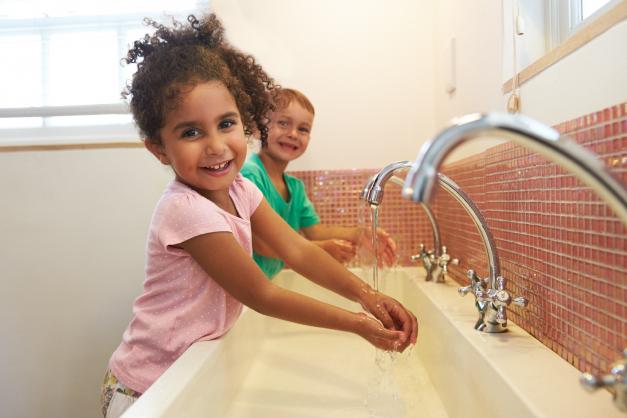
Handwashing protects our own health, but also allows us to build our own futures, as well as those of our communities, and the world. October 15 is Global Handwashing Day to increase awareness and understanding about the importance of handwashing.
The next Global Handwashing Day is October 15, 2026.
Why Does it Matter Now?
One of the most effective ways to stop the spread of a virus is also one of the simplest: hand hygiene, especially through handwashing with soap. To keep communities healthy, handwashing with soap must be a priority now and in the future.
How Can I get Involved?
It’s easy! Join the handwashing movement and help celebrate Global Handwashing Day and make handwashing a habit 365 days a year.
There is a lot you can do and here are a few ideas and resources to help you get started:
- Download and share our Global Handwashing Day Activity Sheet
- Make handwashing a priority in your school and at work with our Healthy Returns resources
- Create a project or activity for Global Handwashing Day
- Download a Global Handwashing Day Poster and display it in your community
- Share ACI’s handwashing resources with your contacts
- Follow ACI on Facebook, Twitter and Instagram and share our handwashing messages with your school community, friends and family or post your own, using #GlobalHandwashingDay.
FAQs
What Are the Origins of Handwashing in Public Health?
Although hand hygiene was advocated in the 19th century by pioneers like Ignaz Semmelweis and Florence Nightingale, it wasn’t until the early 20th century that regular handwashing became widely recognized as essential. As scientific understanding of germs and disease transmission advanced, so did public health campaigns promoting hand hygiene in hospitals, schools and households.
How Can Handwashing Reduce the Spread of Infectious Diseases?
Handwashing has played a critical role in lowering the incidence of infectious diseases, such as diarrhea, respiratory infections, influenza and more recently, COVID-19. By removing pathogens from the skin, regular handwashing interrupts the chain of transmission, protecting both individuals and communities.
What Role Does Handwashing Play in Improving Child Health?
One of the most profound impacts of handwashing has been on child health. Studies estimate that proper hand hygiene can prevent nearly one-third of diarrheal illnesses and one-fifth of respiratory infections among children under five. This can reduce absenteeism and help keep children in school and learning, as well as keep them healthy.
How Does Handwashing Enhance Quality of Life?
In addition to minimizing missed school and work days, handwashing has contributed to improved quality of life by lowering healthcare costs and promoting overall well-being. When fewer people fall ill, productivity rises and economic stability improves. The normalization of hand hygiene has also fostered a culture of personal and community responsibility for health.
Resources for Schools
The Commit to Clean toolkit offers resources for school administrators and educators designed to help communicate the importance of cleaning, disinfecting and hand hygiene for a healthy and successful academic year.
Resources for Businesses
The Healthy Returns toolkit includes resources designed for businesses to deploy in their workplace to help guide efforts and communicate the importance of safety and health as a priority.
Updated: July 27, 2026