
What Are Laundry Pods and Dishwasher Pods?
Laundry pods and dishwasher pods (also known as liquid detergent packets, packs, tabs or capsules) are a breakthrough in effective, easy cleaning. Backed by decades of scientific research and cutting-edge technology, these all-in-one pods contain a precise combination of key cleaning ingredients to deliver an effortless, reliable wash to your clothing or dishes, every time.
Anatomy of a Liquid Detergent Packet


Concentrated formula for a resource-efficient clean

Perfectly pre-dosed to avoid mess, measuring and overuse


Easy to use, lightweight and accessible

Biodegradable film separates key ingredients for maximum cleaning power
Key Benefits of Detergent Pods Explained
Innovative Design for a Powerful Clean
Much more than just washing detergent in a pouch, pods are thoughtfully engineered with advanced cleaning ingredients to deliver a deep clean to your clothing or dishes. Standing apart from liquid or powder detergent forms, many pods use a multi-chamber technology that brings effective cleaning agents into one small, easy-to-handle packet:

Laundry pods can contain stain remover, whiteners and brighteners, and detergent, working together to eliminate odors and remove stains while keeping clothes bright and vibrant.

Dishwasher pods combine powerful degreasers and detergent into a single unit, removing the need for multiple products.
The key to detergent pods’ cutting-edge design is a water-soluble film made of biodegradable polyvinyl alcohol (or PVA), which keeps distinct cleaning ingredients separate and stable until the right moment in the wash, ensuring a powerful clean.

Thanks to pods’ ultra-concentrated form, they deliver more cleaning power per ounce than traditional detergent forms.
Convenient, Easy to Use & Accessible
Laundry and dishwasher pods make cleaning simple, with no heavy detergent bottles, messy spills or guesswork of measuring. Using liquid detergent packets is as easy as:
- Tossing a pod into the washer
- Adding your clothes or dishes
- Selecting your cycle
- Pressing start.
Because each detergent packet is perfectly pre-measured, there’s no guesswork around how much detergent to use. That means less product waste and better value with every wash. Plus, their compact design also means they’re lighter to carry and easier to store, making them a convenient solution and accessible option.
Resource-Efficient for a More Sustainable Clean
Detergent pods are a modern cleaning solution with a concentrated detergent designed to maximize cleaning power. Developed and tested by scientists to exceed strict industry and regulatory standards, detergent pods’ water-soluble film enables a highly compact and concentrated formula, resulting in a product that:
✓ Uses significantly less water than traditional detergent forms
✓ Is pre-measured to prevent using more detergent than is needed
✓ Requires less packaging and generates less waste
✓ Is lighter to ship, resulting in fewer transportation-related emissions

The Sustainable Science Behind Detergent Pods
Five ways laundry and dish pods are thoughtfully designed to be more resource-efficient

Concentrated, low-water formula requires less packaging and is lighter to ship, minimizing transport emissions

Multi-chamber form enables enhanced cleaning power; skip pre-rinse and pre-treat

Perfectly pre-dosed to avoid unnecessary product waste

Laundry pods designed to work in cold water, reducing 90% energy in every wash

Designed using a dissolvable, biodegradable PVA film
Fun fact

Stringent scientific studies show that PVA fully biodegrades in a variety of conditions, including wastewater treatment plants1 and river water2.
1 Application of standardized methods to evaluate the environmental safety of polyvinyl alcohol disposed of down the drain, Integr Environ Assess Manag (2024)
2 Water soluble polymer biodegradation evaluation using standard and experimental methods, Sci Total Environ. (2023)
How to Use Detergent Pods Correctly
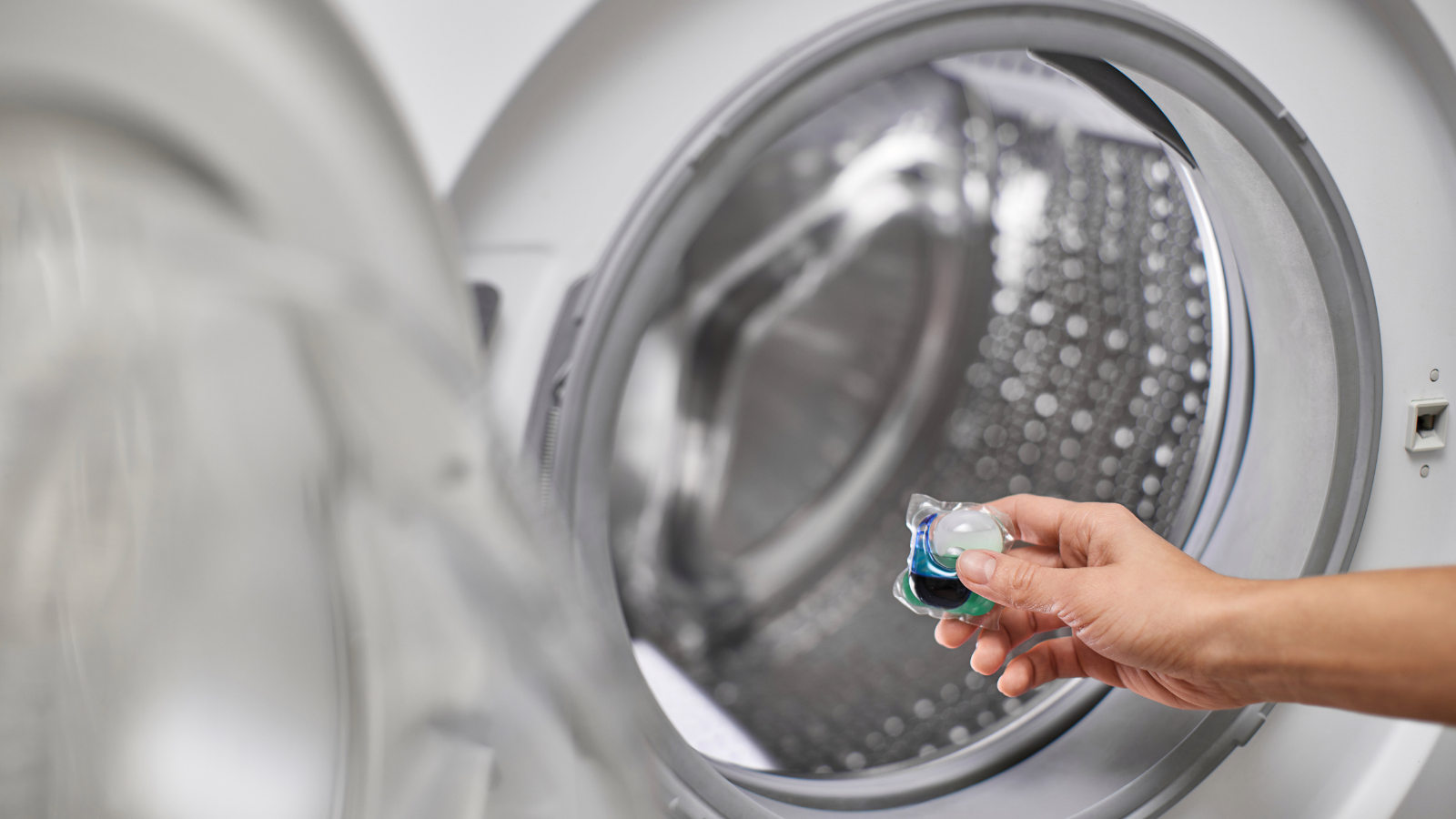
PRO TIP: Always place the pod into your washing machine drum before adding your clothes to ensure it dissolves properly. If you’ve ever experienced a laundry pod not dissolving and leaving sticky residue on your clothes, following this tip will help. Placing the detergent packet in first does two things:
- Ensures adequate water exposure so the pod dissolves quickly and completely (most washing machines fill with water from the base of the drum), and
- Allows the detergent to distribute evenly throughout the cycle for a better clean.
There may be another reason why your pods aren’t dissolving fully in the wash. You may be trying to wash too many clothes at once. To determine whether or not your washing machine is overstuffed, use the palm trick for front-loading machines:
- Place your hand vertically into the machine, like you’re giving it a handshake.
- If your hand fits comfortably between your clothes and the top of the machine, you haven’t put too much in.
- For top loading machines, keep your load below the agitator (the middle piece of the washing machine that spins), and you’re good to go.
Remember these three tips, and your detergent packet should dissolve as it’s supposed to:
- ALWAYS place the pod directly in the drum first, then your clothes
- NEVER put the pod into the detergent drawer, unless it’s specifically labeled for pod usage
- DON’T overstuff the washing machine with clothes
The Science Behind Pod Films and Biodegradability
Ever wondered what happens to a detergent pod film after it leaves the wash? Learn more about the fascinating science behind detergent pods
The film surrounding detergent pods dissolves completely during the wash cycle and then travels with the wash water to a wastewater treatment plant where it naturally biodegrades1. Detergent pods use a water-soluble film made of biodegradable polyvinyl alcohol (PVA). The film stays strong and intact when dry, allowing for safe transportation to store shelves and your home, but dissolves completely when fully submerged in water during the wash cycle, before ultimately biodegrading at end of life.
Safe Usage & Storage Guidelines for Detergent Pods
Do you know how to safely use and store detergent pods? Safety is simple with these guidelines:
From the packaging to the label to the pod design itself, detergent pods were created with consumer safety in mind. For example, manufacturers have worked closely with public safety experts to develop a safety standard for the cleaning industry that includes features like:
- Child-resistant packaging
- Warning and safety information on product labels
- Films that are bitter-tasting, hard to squeeze and have delayed dissolution when outside of your dishwasher or washing machine
While pods make laundry and dishwashing easier with their convenient design, it’s important to make sure you’re properly using and storing your pods – this includes critical every day tips such as:
- Always placing liquid detergent packets up high and out of reach of children, pets, or adults with cognitive challenges.
- Keeping products in their original container with child-resistant packaging, with the original label intact
Frequently Asked Questions About Laundry & Dishwasher Pods
If your detergent pods are not dissolving properly, it means they aren’t being fully submerged in water during the wash cycle. To ensure adequate water exposure, always put the pod in your machine first, then your clothing. Also, avoid overstuffing the drum.
Yes, like other detergent types, pods are designed to clean and dissolve in any water temperature, allowing for cold water cycles that use less energy. In fact, washing laundry in cold water can save up to 90% of the energy in every load, on average. Washing in cold water can also benefit consumers’ wallets, helping them save up to $200 per year on energy bills.
Yes, pods are safe for septic systems, so they can be used in households with septic systems without concern.
No, dishwasher pods do not clog pipes. When used as directed, dish pods’ water‑soluble film dissolves completely during the wash cycle, meaning nothing is left behind. A few tips to ensure proper dissolution: make sure the detergent dispenser door isn’t blocked by utensils or pot handles, and verify your machine is properly filling with water.
Decades of scientific research has found that detergent pods are safe for the environment. To fully understand the safety of polyvinyl alcohol (PVA) in detergent pods, it’s important to know that not all PVA is created equal. PVA describes a large number of polymers, each with different properties. PVA can be highly water soluble (meaning it dissolves rapidly in water), like the grade of PVA used in detergent pods, medicines and food, or insoluble, like PVA grades used in glue. The PVA grades used in detergent pod films, food and medicines are water-soluble and are safe for humans and the environment. While polyvinyl alcohol (PVA) detergent films share some characteristics with plastics when dry, their environmental impact and behavior is very different. There is zero scientific evidence that the grade of PVA used for detergents contributes to microplastic pollution.
Pods were thoughtfully designed with environmental impact in mind. Pods use concentrated design that maximizes cleaning power while minimizing resources – less water, less packaging, less overpouring / unnecessary product waste. Thanks to pods’ compact form, they’re also lighter to ship, resulting in fewer transportation-related emissions. Plus, pods are designed to dissolve in any water temperature, allowing for cold water cycles that use less energy.
Yes. The film surrounding detergent pods is made polyvinyl alcohol (PVA) that is soluble in water and fully biodegradable. This water-soluble grade of PVA stays strong and intact when dry but dissolves completely when fully submerged in water during the wash cycle. When the cycle is over, the dissolved PVA particles leave with the dirty wash water and travel to wastewater treatment plants, where it naturally biodegrades4.
When used as directed, detergent pods are safe for the whole family. However, safe storage and proper usage is absolutely critical. Always keep pods out of the reach of children, pets, and older adults with cognitive impairments and pay attention during use and disposing of products.
Laundry pods are designed to fully dissolve in the wash. In order to make sure they work effectively, make sure to put the laundry pod in the washer before the clothes and not to overfill the drum. For a front load washer, put your hand in vertically, like you're giving a handshake. Your hand should fit comfortably between the clothes and the top of the drum. If it doesn't, the machine is too full. For a top load washer, the clothes shouldn't be piled higher than the agitator, or about 2/3 full if there is no agitator.
Use cleaning products only as directed on the label. Use laundry pods for laundry and dishwasher pods for dishwashing.
1 Biodegradability of Polyvinyl Alcohol Based Film Used for Liquid Detergent Capsules, Tenside Surfactants Detergents (2021)
2 Application of standardized methods to evaluate the environmental safety of polyvinyl alcohol disposed of down the drain, Integr Environ Assess Manag (2024)
3 Water soluble polymer biodegradation evaluation using standard and experimental methods, Sci Total Environ (2023)
4 Biodegradability of Polyvinyl Alcohol Based Film Used for Liquid Detergent Capsules, Tenside Surfactants Detergents (2021)
Updated: March 31, 2026