
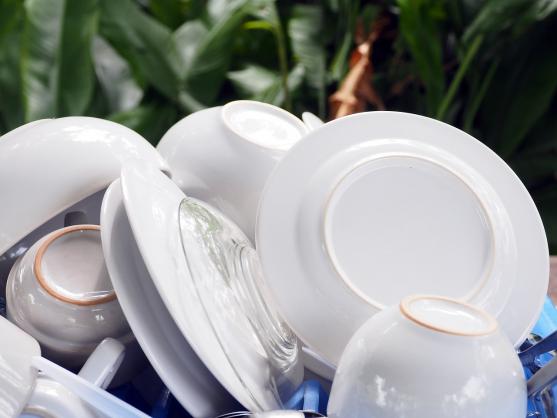
How to Wash Dishes By Hand:
- Prep - scrape off food
- Fill - get some clean, hot, soapy water
- Wash - scrub them, under the water
- Rinse - wash off all suds and residue
- Dry - air dry or towel dry
There are two common ways to hand wash dishes: by "diluting" dish detergent in a sink or dishpan filled with water, or by squirting detergent directly onto a sponge or the dirty dish (called the "neat" method). Whichever dishwashing method you choose, be sure to follow product directions to determine the right amount of detergent – especially with concentrated varieties, which may require less product than you think. Read the label!
REMEMBER: some cookware, like baking pans with air cushioned inside, should not be submerged in water. Check the manufacturer’s instructions for advice!
Step By Step Guide to Washing Dishes:
1. PREP
Scrape dishes to remove leftover food - use a rubber spatula or paper towel. For stuck-on foods, soak dishes/cookware before washing: add detergent or baking soda to the sink/dishpan (or soiled pot) and fill with hot water; soak for 15 to 30 minutes, then drain and proceed with Step 2.
TIP: never pour grease down the drain -- it can cause a clog.
2. FILL
Fill sink or dishpan with clean, hot water. Add dish soap to the water (read the label for dosage; some concentrated dish detergents require a smaller amount). Stack a few dishes in the sink at a time – this allows a few minutes of soaking time while you work on washing.
TIP: Throughout the process, drain the water and start over if it becomes greasy, too cool, or if suds disappear.
3. WASH
Wash "in order," starting with lightly soiled items. This usually includes glasses, cups, and flatware. Washing these items first followed by plates/bowls and serving dishes. In general, dishes wash easily if you keep them under the water while scrubbing them; as you work, pull each dish out of the water to check for missed spots. End with cookware/pots and pans; if you soaked pans with baked-on foods, washing will be easier. Don’t forget to wash the bottom of the pan.
TIP: Be extra careful when handling kitchen knives! Don’t pile them in the sink; instead, wash them one by one and immediately place them handle-up in the drying rack (or flat to dry).
4. RINSE
Rinse suds and residue with clean hot water. Rinse by dipping in a rinsing sink or pan, passing under a stream or spray of hot water; or, by placing them in a drying rack and pouring or spraying water over them. If you have a double sink, use the second sink to rinse off washed dishes.
TIP: Be sure to rinse inside cups, bowls and glassware
5. DRY
Air drying is easier than towel drying. However, wiping with a clean towel is helpful when glassware or flatware is spotted or filmed. Make sure the towel is clean, and change the towel when it becomes damp. Paper towels work well for drying pots and pans, especially if they contain traces of grease.
TIP: Remember to clean up when you’re done. It’ll make tomorrow’s task easier! Rinse and wipe down the sink, dish drainer, and dishpan. Rags, dish cloths, and sponges should be left out to air dry, or laundered in the washing machine. Remember to replace sponges and rags frequently.
Dishwashing Supplies List
For Washing:
- Liquid dish detergent
- Hot water
- Double sink or dishpan
- Dishcloths, scrubbers, sponges, steel wool
For Drying:
- Dishrack or clean towel laid out for air drying
- Clean towel for hand-drying (optional; helpful for spotted/filmed glassware and flatware)
- Paper towels to dry pots and pans (optional)
Dishwashing FAQ
How much soap should you use when washing dishes?
Check the product labe for gudiance. About 1 teaspoon of liquid dish soap per sinkful of wash water is often sufficient. If it takes a long time to rinse, you may be using too much product.
Do more suds mean more cleaning?
More suds doesn't necessarily mean more cleaning but suds can be a helpful signal that detergent is present in the wash water. If the suds disappear quickly or the water becomes cloudy or greasy, change out the wash water and add more dish soap.
Should you apply soap directly to the sponge?
There are two main methods of washing dishes. “Dilute” is where you fill a dish pan or sink with hot water and add the dish detergent to the water. “Neat” is where you squirt the product directly on their sponge or wash cloth and use it straight on the dirty dishes. “Dilute” is more economical and “neat” is more convenient. There are also dish sprays that are designed to go directly on the dishes.
When should you soak your dishes before washing?
Dishes with greasy soils or stubborn baked-on foods may need to be soaked first. To do this, add liquid hand dishwashing detergent to the pot or pan, then fill with hot water, if safe for the cookware. Soak about 15 to 30 minutes, then drain the water before washing and rinsing the dishes or cookware.
When should you use the dishwasher?
Most dishes can be washed in a dishwasher. Always check to see if something is dishwasher safe first. If you are washing more than 8 dishes, it will use less water and energy to use the dishwasher than washing them by hand.
Updated: March 31, 2026