
Cleaning Products: Essential to America's Economy
The U.S. cleaning products industry is an essential contributor to both the nation's health and its economic strength. Beyond delivering the products that help keep people and places clean, safe, and healthy, the industry supports a vast network of manufacturers, suppliers, distributors, and workers across the country.
ACI's Economic Impact of the U.S. Cleaning Products Industry report details the substantial contribution of the cleaning products industry to the U.S. economy, both nationally and at the state level.
The Outsized Impact of Clean
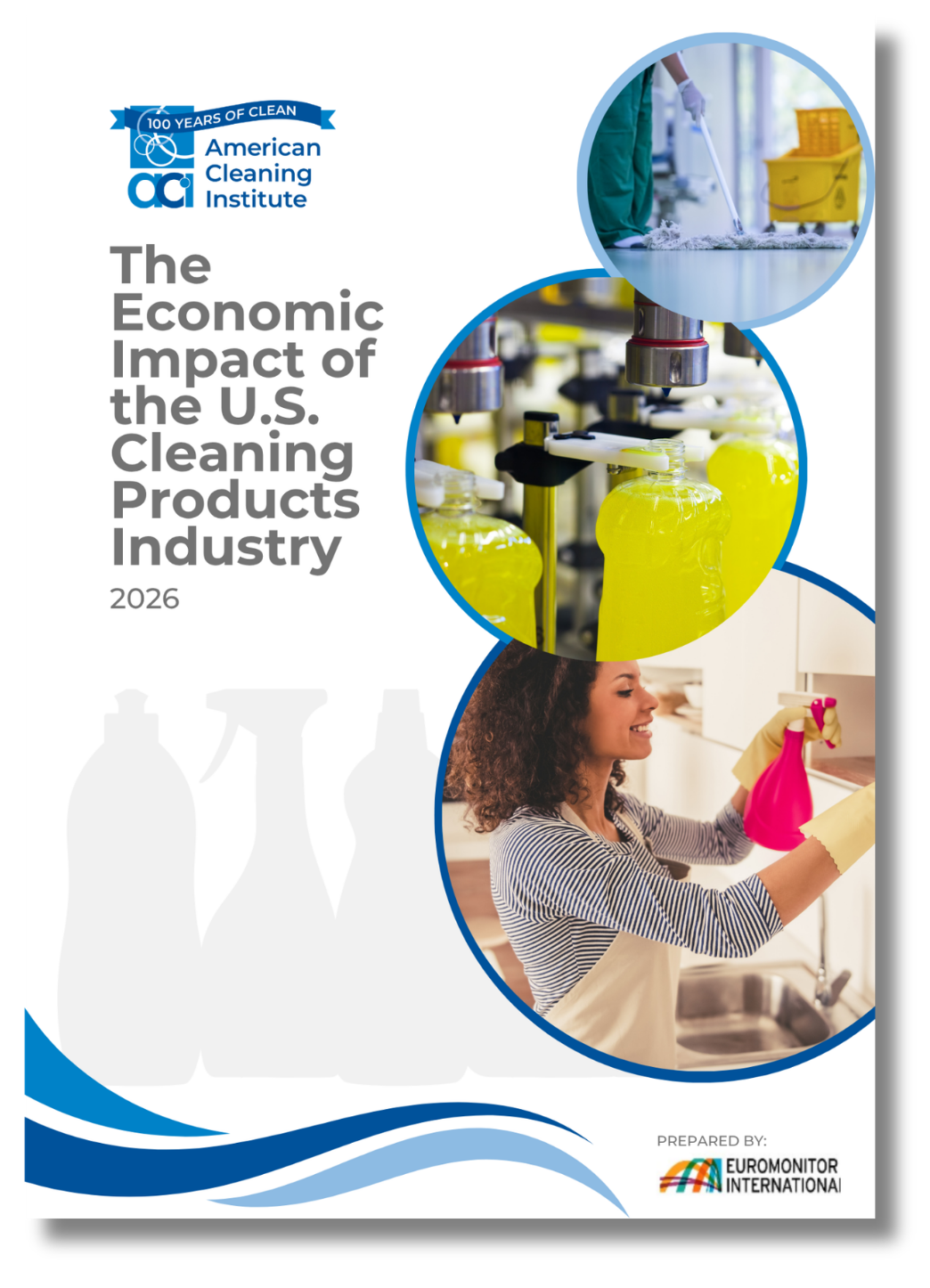
Behind every bottle of detergent and every household cleaner is an industry quietly powering a much larger part of the American economy.
The U.S. cleaning products industry generates $88.5 billion in direct economic output and employs nearly 65,000 people directly. But that's just the starting point. Once you count the ripple effects through suppliers, packaging producers, and everyday worker spending, the industry's full footprint reaches:
- $103.6 billion in total economic output
- Nearly 125,000 jobs supported nationwide
- $15.1 billion in wages and benefits paid to American workers
For every job at a cleaning products manufacturer, nearly one additional job is supported elsewhere in the economy.

What To Know
A Major Economic Engine
Cleaning products are essential consumer goods and the cleaning products industry is a significant contributor to the U.S. economy. The impacts of the industry extend far beyond its manufacturing base, supporting 125,000 jobs nationwide.
Driven by Innovation
After the extraordinary conditions of the pandemic, the industry has transitioned to a more stable growth trajectory, driven by new technologies consumer-focused product advancements. Innovation remains central to the industry's future competitiveness.
Navigating Supply Chains
The industry faces increasing pressure from tariffs, evolving trade policies, and global sourcing challenges. Supply chain resilience and sourcing diversification have become strategic priorities for many in the industry.